
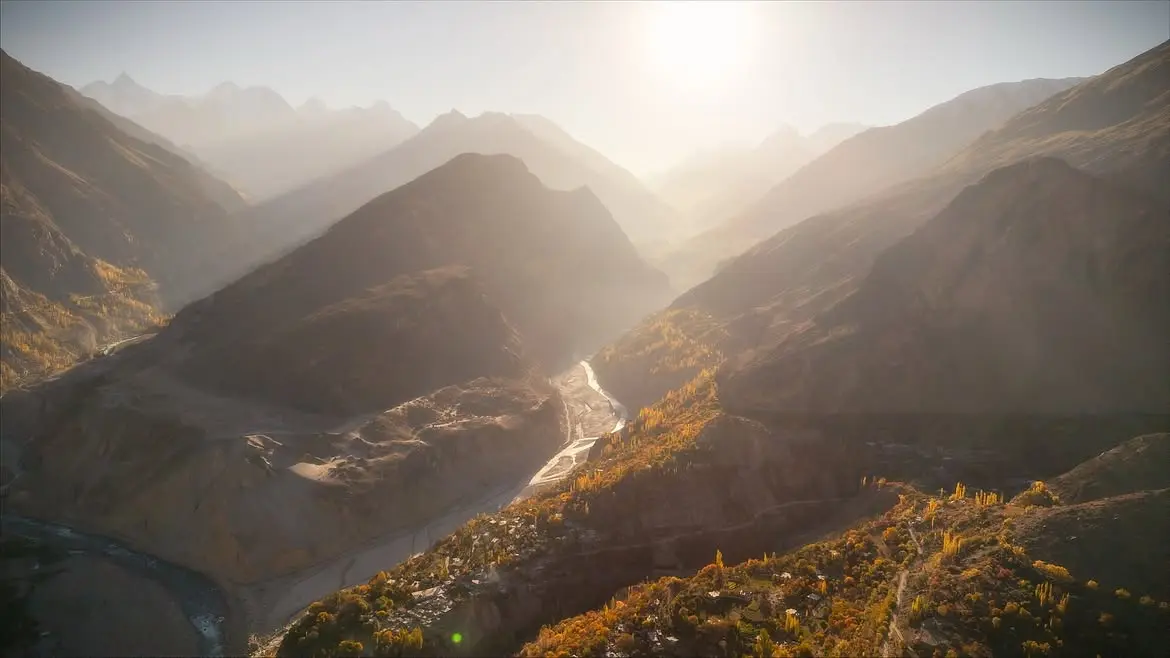
Autumn in Pakistan is not one fixed week or one single landscape. Across northern Pakistan, poplar-lined villages, fruit orchards and river terraces change from green to yellow, amber, copper and red at different times according to altitude, local weather and the character of each valley. Hunza is celebrated for its concentrated autumn colour, while Skardu adds a broader, more rugged contrast of river plains, heritage valleys, lakes and desert scenery.
October can be an excellent month for travellers who value photography, culture and a calmer pace, but it also demands realistic planning. Days shorten, mornings and evenings become colder, domestic mountain flights remain weather-dependent, and seasonal roads such as Babusar Pass or routes across Deosai cannot be assumed open. This guide explains how to plan a rewarding Hunza and Skardu journey without treating mountain conditions as guaranteed.
When Is Autumn in Pakistan?
For most northern mountain valleys, the useful autumn window usually falls between late September and early November. The strongest foliage is often seen during October, but exact colour develops differently from one settlement to another. Lower, sunnier orchards may turn before shaded or higher locations, and an early cold spell can accelerate the change.
Hunza autumn is commonly planned from early to late October, with central Hunza and nearby villages often providing the most layered colour. Upper Hunza can look more open and dramatic, but its higher elevation also means colder conditions. Skardu autumn can extend across a wide landscape, with poplars and cultivated pockets creating colour beside bare mountains, rivers and desert terrain.
Think of autumn timing as a moving window rather than a date printed on a calendar. If photography is the main reason for travelling, allow several days in each region and visit more than one elevation instead of expecting one famous viewpoint to be at peak colour on a particular morning.
Why Visit Pakistan in October?
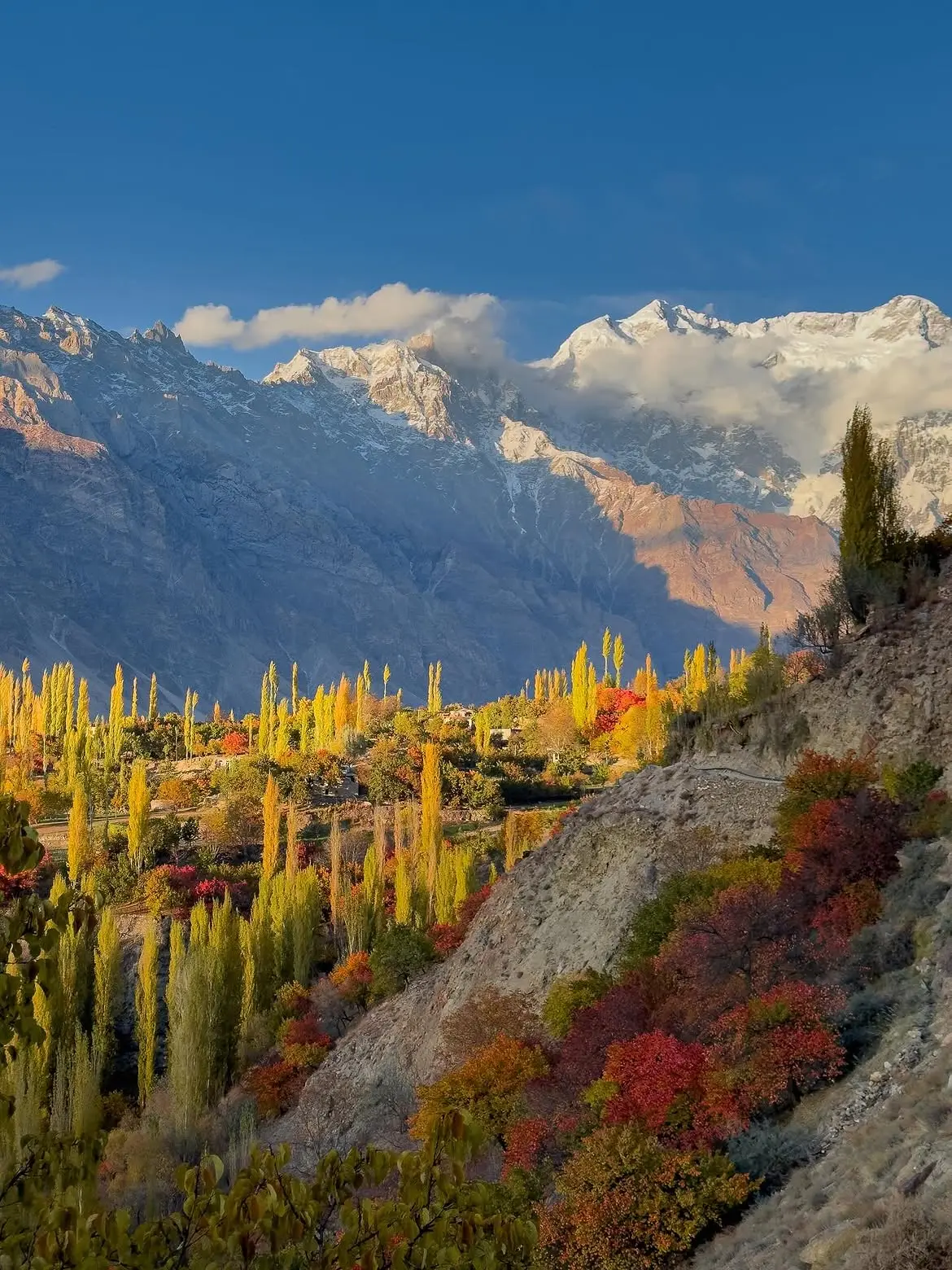
Pakistan in October offers a different northern experience from the busy summer season. Many families have returned to school and work, the air can feel clearer after the warmer months, and village life becomes more visible as orchards are harvested and communities prepare for winter. The quieter atmosphere creates time for walking, conversation and observation rather than moving continuously between crowded stops.
For photographers, the appeal comes from contrast: warm foliage below snow-dusted or rocky mountains, turquoise water beside amber trees, and soft morning light over historic settlements. Couples and cultural travellers may prefer the slower rhythm, while first-time international visitors can combine natural scenery with forts, bazaars and community etiquette in one coherent route.
The trade-off is reduced certainty. Cold snaps, snowfall, shorter daylight and changing road access can affect the plan. A good Pakistan autumn tour should therefore include sensible driving times, a weather alternative and honest communication rather than promising every seasonal attraction.
- Rich foliage across orchards and village corridors
- Fewer visitors than the main summer holiday period
- Comfortable walking conditions in sunshine, with colder mornings and evenings
- Strong landscape and cultural photography opportunities
- A need for warmer layers, flexible routing and current access checks
Hunza in Autumn: Pakistan’s Golden Valley
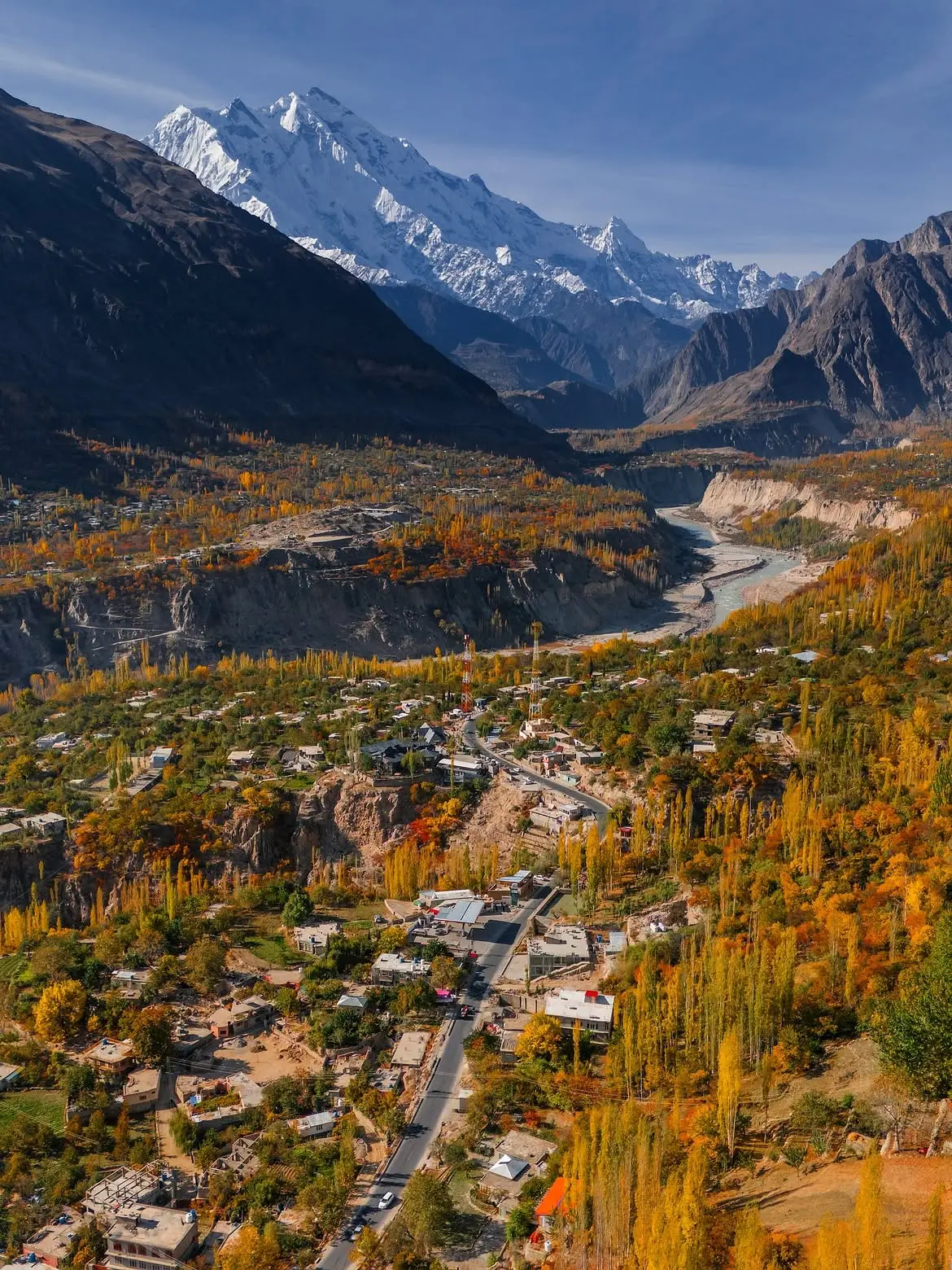
Hunza is one of the best places to see autumn in Pakistan because cultivated villages sit close together beneath enormous Karakoram peaks. Apricot, walnut, apple and poplar trees create bands of colour around stone houses, irrigation channels and terraced fields. The result feels intimate: autumn is not only viewed from a highway; it can be experienced on quiet village walks.
Central Hunza is especially practical for first-time visitors because Karimabad gives access to heritage sites, local cafés, bazaars and viewpoints without changing hotels every night. Nagar and Hopper add a different angle across the valley, while Upper Hunza introduces Attabad Lake, Passu and Hussaini against a more open, high-mountain setting.
Karimabad, Altit and Baltit
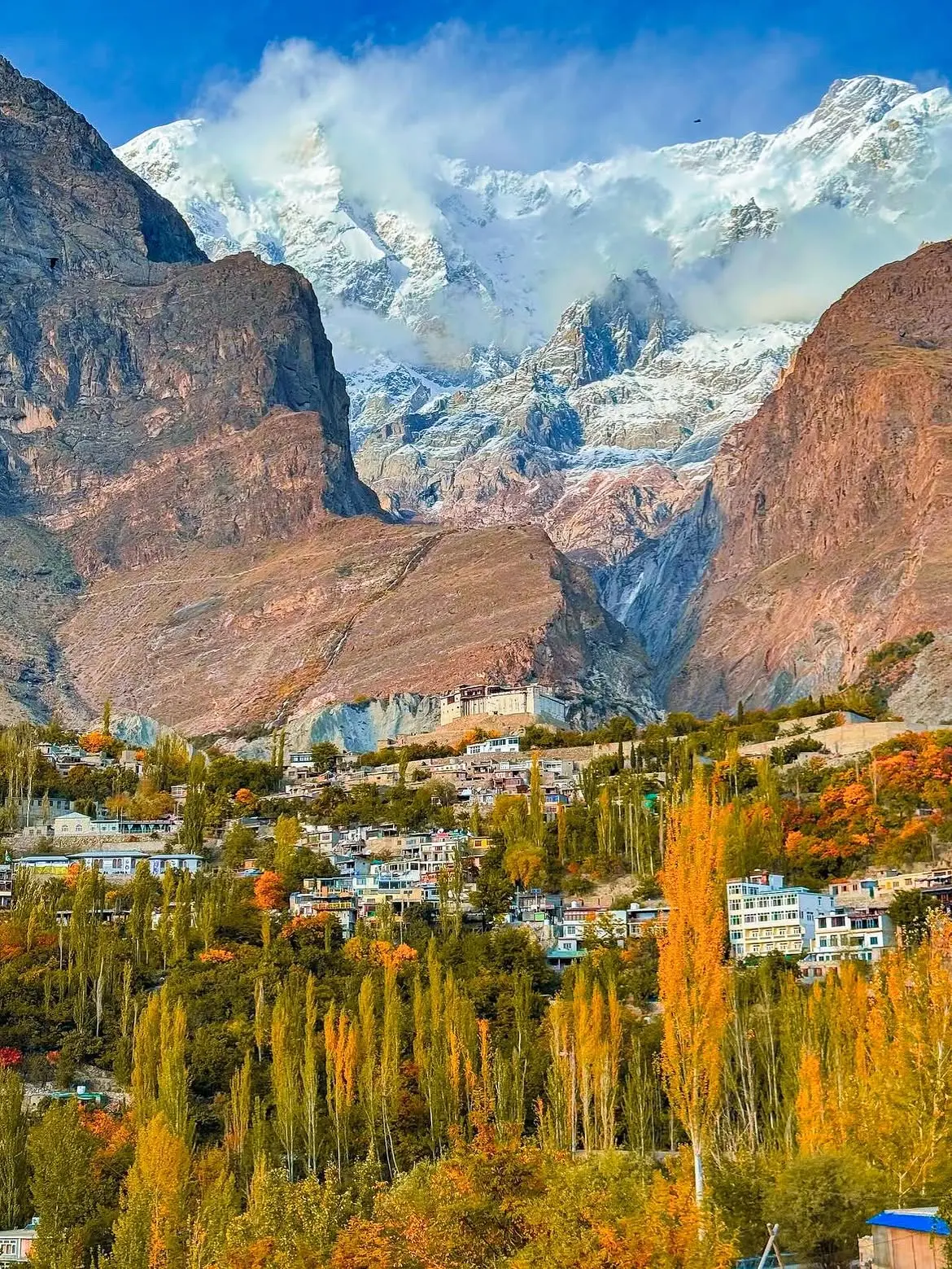
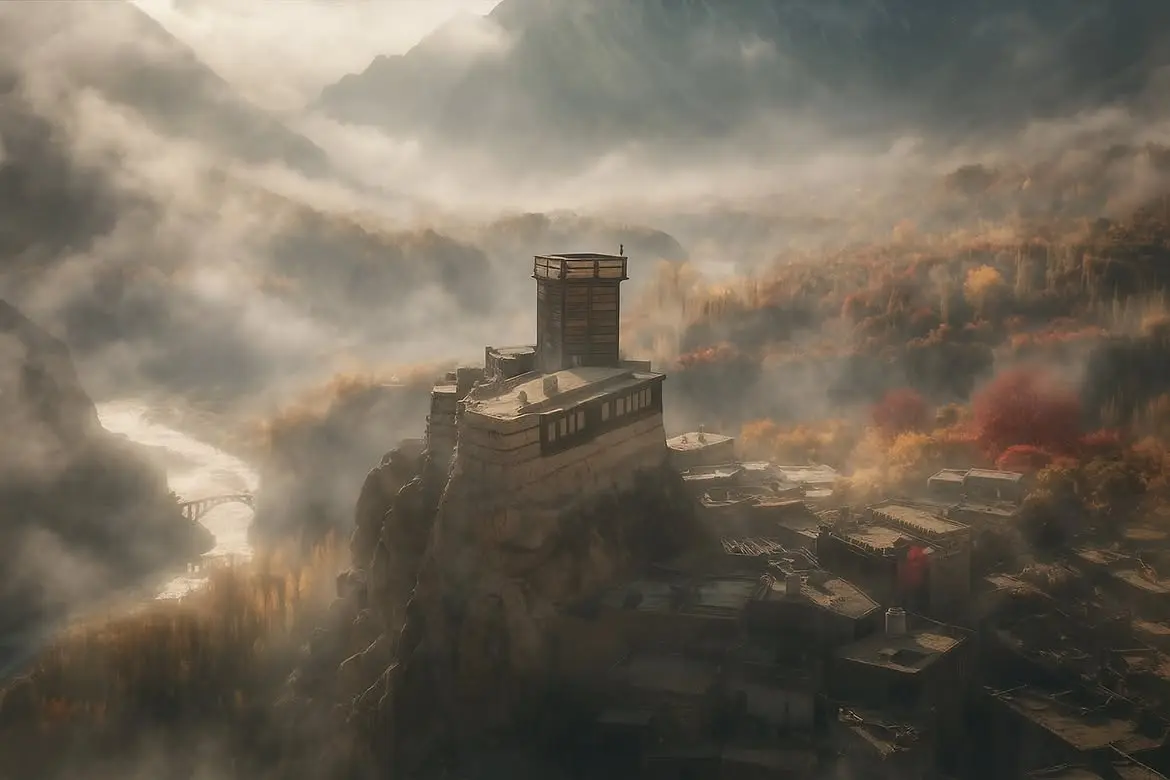
Karimabad is a useful base for understanding both the landscape and the living culture of Hunza. The lanes around the bazaar lead toward older settlements, orchards and viewpoints. Baltit Fort rises above the town, while Altit combines a historic fort, village lanes and gardens that can be particularly attractive during the colour change.
These places reward time. A short photo stop cannot replace walking slowly, noticing architecture and asking before photographing residents. Fort opening hours and entry arrangements should be confirmed locally, especially later in the season.
Eagle’s Nest and Duikar
Duikar, commonly associated with the Eagle’s Nest viewpoint, looks across central Hunza toward surrounding peaks and villages. Sunrise can reveal the valley gradually, while late-afternoon and sunset light often warms both the rock and foliage. Conditions can be windy and considerably colder than Karimabad, so carry an extra layer even when the valley floor feels comfortable.
Photography depends on visibility, cloud and seasonal light; no viewpoint guarantees a dramatic sunrise. Arrive early, keep tripods clear of other visitors and stay away from unsafe edges in low light.
Nagar and Hopper Valley
Across the river from central Hunza, Nagar and Hopper offer a contrasting perspective. Villages, orchards and glacial terrain sit beneath sharp peaks, and the road itself reveals changing views back toward Hunza. Hopper is useful for travellers who want autumn colour with a rougher mountain backdrop.
Allow enough daylight for the return journey and confirm local road conditions. Short walks may involve uneven ground, so suitable footwear matters more than trying to cover every viewpoint.
Upper Hunza: Attabad Lake, Passu and Hussaini
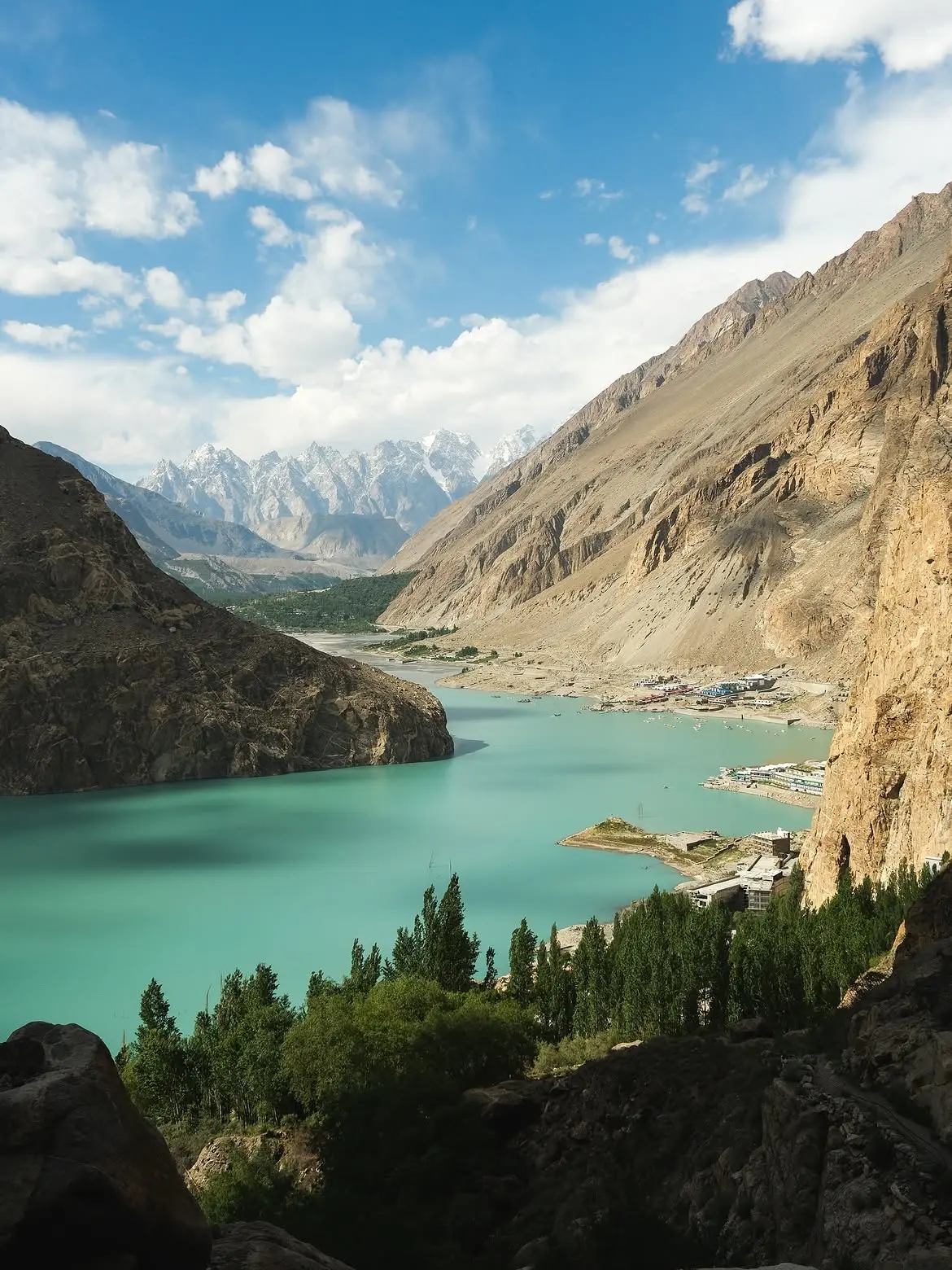
Upper Hunza feels visually different from central Hunza. Villages are more dispersed, the valley opens around the Karakoram Highway, and iconic rock formations dominate the horizon. Autumn colour is often seen in cultivated pockets rather than as one continuous forest, which makes the contrast with blue water and grey mountains especially striking.
Attabad Lake
Attabad Lake provides strong colour contrast when golden trees frame its turquoise water. Morning conditions may be calmer, while afternoon light can produce deeper shadows along the surrounding slopes. Boating is optional and subject to local availability and weather; travellers who prefer photography can also work from safe roadside and shoreline viewpoints.
Passu Cones
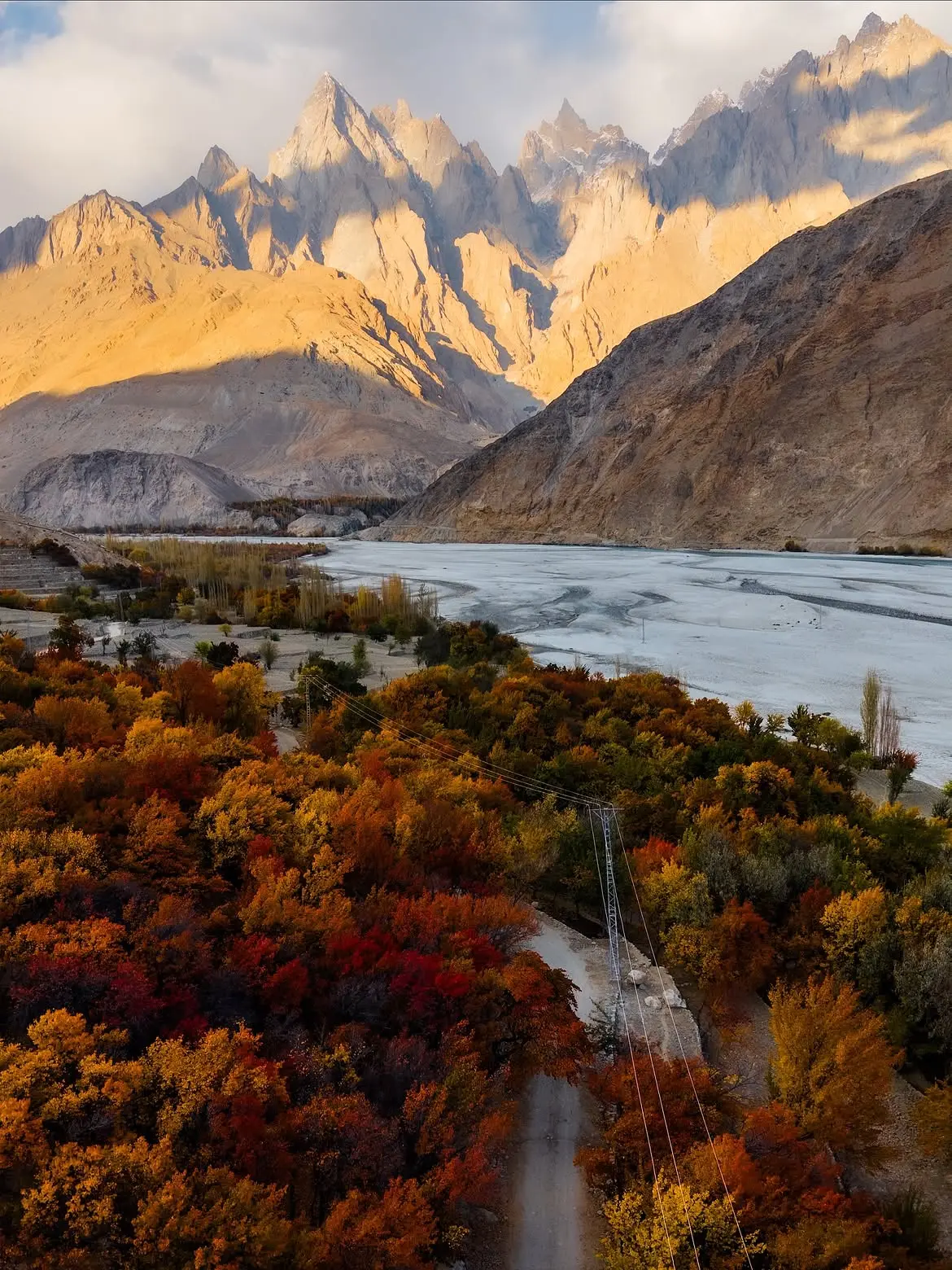
The Passu Cones are defined more by shape and scale than foliage. Autumn trees near villages and fields add a warm foreground to the sharp mountain skyline. Photographing from different distances gives a better sense of place than repeating the familiar roadside composition.
Hussaini
Hussaini is known for its suspension bridge and views across the river corridor. The crossing is an adventure experience rather than a requirement; anyone uncomfortable with heights can still appreciate the setting from safe ground. Wind, crowding and local instructions should guide the visit, and travellers should avoid obstructing residents who use local paths and bridges.
Skardu in Autumn: A Different Side of Gilgit-Baltistan
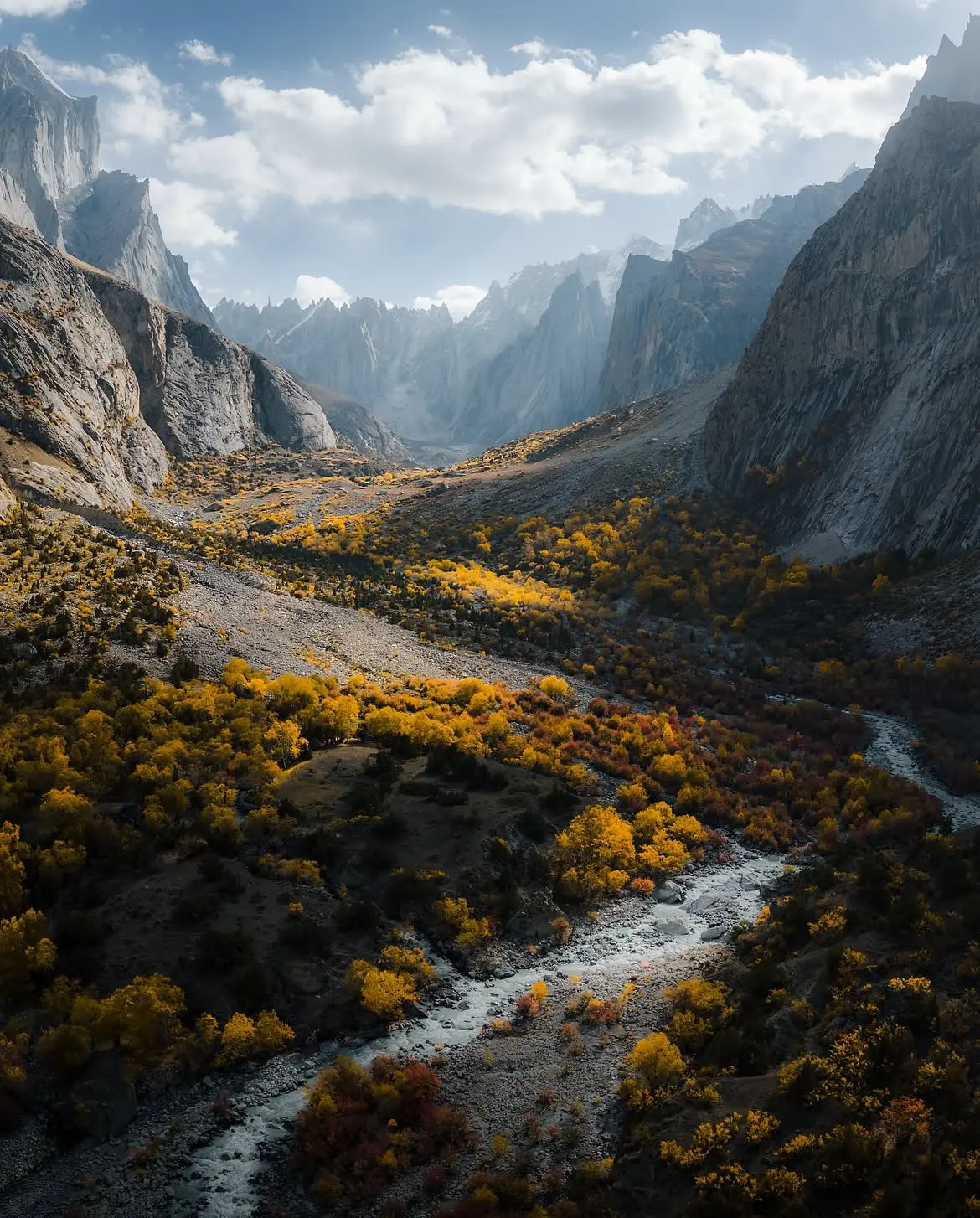
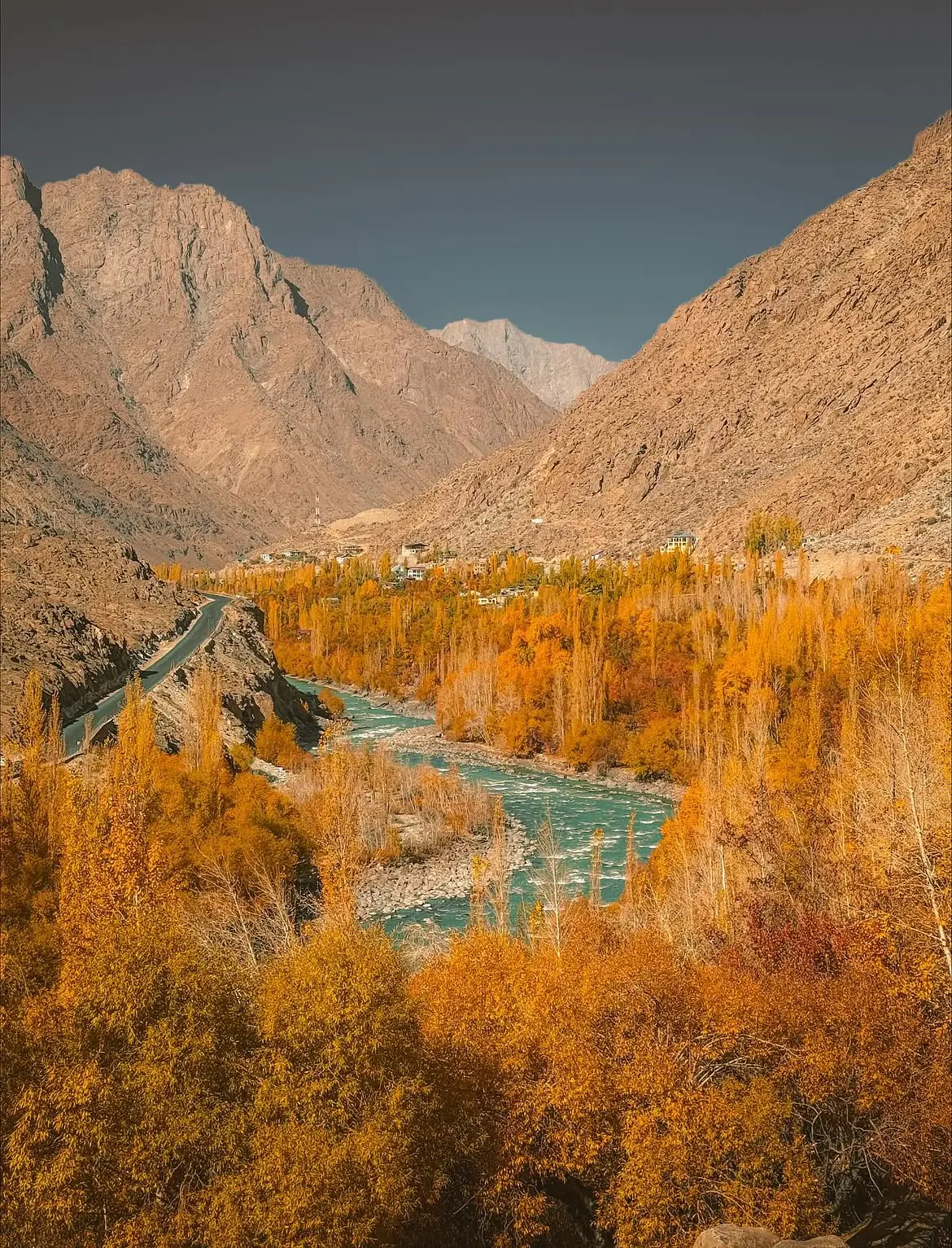
Skardu complements Hunza rather than simply competing with it. The region feels broader and more elemental, with the Indus corridor, river plains, cold-desert landscapes and historic valleys extending between stark mountain walls. Autumn appears in poplar rows, village fields and cultivated pockets, creating colour against a much more open background.
The transfer between Hunza and Skardu is a substantial mountain-road day and should be treated as part of the journey, not an empty gap. A combined itinerary works best when Skardu receives at least three useful sightseeing days after the transfer, with additional time if remote valleys or weather-sensitive excursions are important.
Shigar Valley
Shigar combines cultivated villages, heritage architecture and mountain scenery. A visit can include village streets and the Shigar Fort area, but the strongest experience comes from understanding how settlement and agriculture developed around water in a high-altitude environment. Opening hours and entry arrangements should be checked before departure.
Upper and Lower Kachura
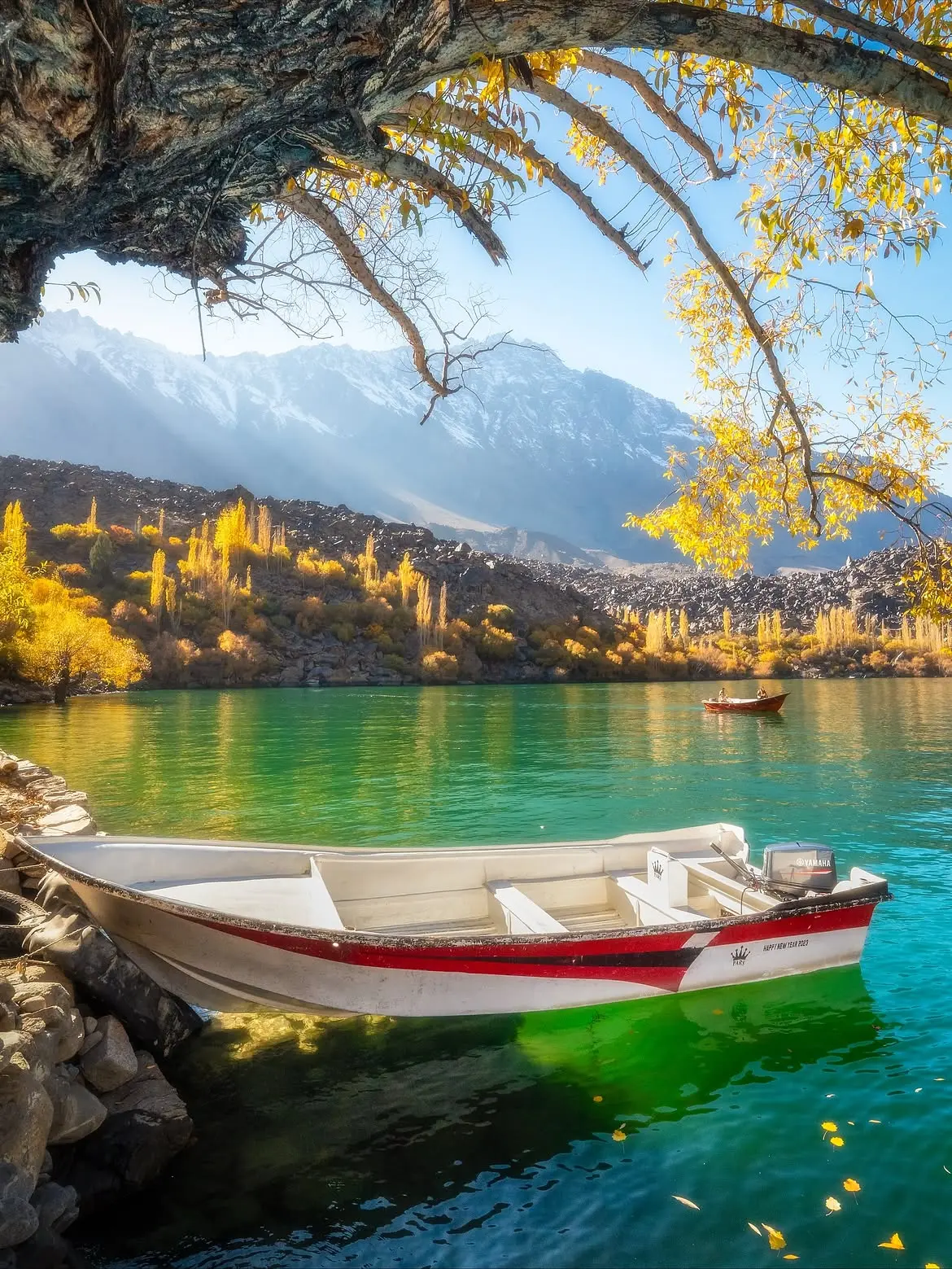
Upper Kachura is a compact alpine lake reached through a village landscape, while Lower Kachura is associated with a more developed resort setting. Both can provide reflections and autumn framing when conditions are calm. Sun position, wind and access matter, so photographers benefit from choosing one lake carefully rather than rushing between both at midday.
Sarfaranga Cold Desert
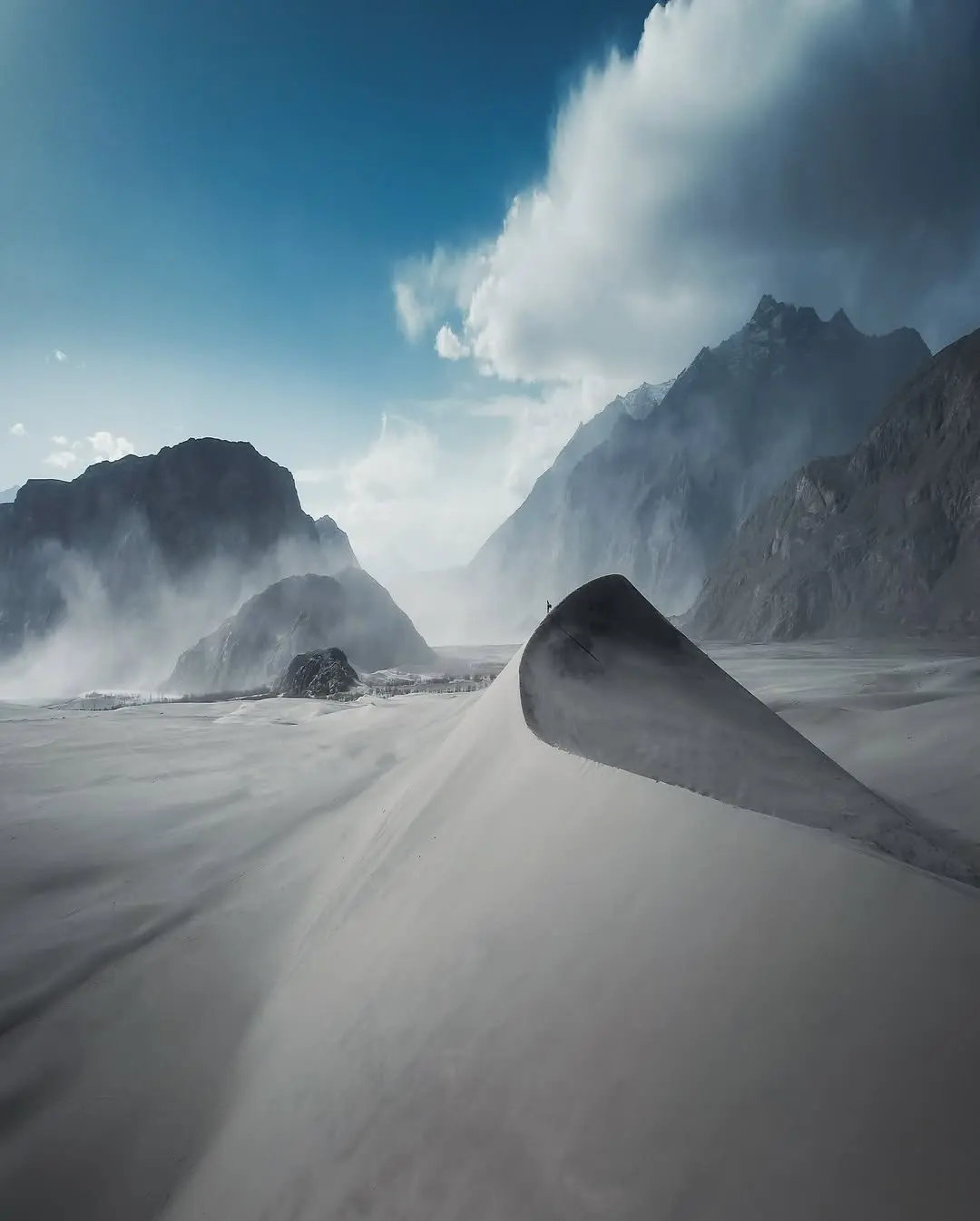
Sarfaranga is not a foliage destination in the same way as Hunza. Its value is contrast: pale dunes, dark ridges, changing light and nearby cultivated land. Late afternoon can create more texture across the sand, but temperature drops quickly after the sun lowers.
Manthokha and other day trips
Manthokha Waterfall can be combined with a longer regional sightseeing day when road and daylight conditions make sense. Basho, Soq Valley and other excursions each require their own travel time and local access assessment. Avoid stacking several remote areas into one day simply because they appear close on a map.
Hunza vs Skardu in Autumn — Which Should You Visit?
Choose Hunza if your priority is concentrated foliage, village walks, heritage and iconic Karakoram viewpoints within a relatively connected valley. Choose Skardu if you want broader landscapes, stronger desert-and-river contrast, Baltistan heritage and a wider selection of long day excursions.
International travellers with 10 or more days do not necessarily need to choose. Hunza and Skardu can form one logical Gilgit-Baltistan journey when the road transfer, weather buffer and sightseeing time are respected. With fewer days, one region explored well is usually better than both visited in a rush.
| Planning factor | Hunza in autumn | Skardu in autumn |
|---|---|---|
| Scenery | Orchards, villages and sharp Karakoram peaks | Rivers, plains, deserts, lakes and Baltistan valleys |
| Autumn colour | More concentrated around central villages | More dispersed in cultivated pockets and poplar corridors |
| Culture | Hunza heritage, forts, bazaars and village life | Baltistan heritage, forts, villages and historic valleys |
| Pacing | Several highlights can be grouped from one base | Day trips are often longer and more geographically spread |
| Photography | Foliage, villages, peaks and Attabad contrast | Wide landscapes, desert textures, lakes and river light |
| Best fit | First-time autumn visitors and village-focused travellers | Landscape explorers who can allow longer excursion days |
What Is the Weather Like in Hunza and Skardu in October?
October weather in Gilgit-Baltistan changes quickly with elevation, shade and the progress of the season. In inhabited parts of central Hunza and Skardu, sunny afternoons may feel mild, while early mornings and evenings can be cold. Travellers should be prepared for daytime conditions roughly in the low-to-high teens Celsius, with nights that may fall into single digits or approach freezing later in the month. Higher viewpoints and exposed valleys can feel colder because of wind.
These figures are planning ranges, not forecasts. Hunza weather in October can differ from Skardu weather on the same date, and a clear morning may give way to cloud, rain or an early snowfall. Check a current forecast shortly before each mountain sector and pack for conditions colder than the city temperature displayed on a phone.
Heating standards also vary between hotels. International visitors who feel the cold should confirm room heating and hot-water arrangements rather than assuming the same indoor comfort found in Islamabad.
What to Pack for Pakistan in Autumn
Layering is more useful than relying on one very heavy coat. A breathable base layer, warm mid-layer and wind-resistant outer layer can be adjusted between sunny valleys, shaded forts and cold viewpoints. Pack modest, comfortable clothing that works for village walks and cultural sites, and keep one warm layer in the daypack rather than inside checked luggage.
- Light base layers plus a fleece or warm sweater
- A warm, wind-resistant jacket for early mornings, evenings and viewpoints
- Comfortable walking shoes with grip for uneven paths
- Warm socks, a hat and light gloves for colder days
- Sunscreen, sunglasses and lip balm for high-altitude sun and dry air
- A small daypack and reusable water bottle
- Personal medication and a basic travel-health kit
- Power bank, spare memory cards and protective camera storage
- A light scarf or extra layer for cultural and religious sites
Travelling Through Northern Pakistan in Late October
Late October can still deliver excellent autumn colour, but route decisions must be made with current conditions. The Karakoram Highway is the core year-round approach to Hunza, although mountain-road delays can occur. Babusar Pass is seasonal and may close after snowfall; it should never be guaranteed for a late-October itinerary. A responsible operator confirms access near departure and keeps the Karakoram Highway alternative ready.
Deosai is also a high-altitude seasonal area. By late October, snow and operational conditions may make access unsuitable or impossible, so it should be presented only as a conditional possibility—not a promised inclusion. Lower-altitude Skardu experiences such as Shigar, Kachura, Sarfaranga or Manthokha may provide stronger alternatives depending on conditions.
Domestic flights between Skardu and Islamabad are useful for reducing road time, but mountain weather and airline operations can affect them. Keep an appropriate buffer before an international departure and avoid placing a weather-sensitive domestic flight directly before a non-changeable long-haul connection.
Best Places for Autumn Photography in Pakistan
The best autumn photography is rarely produced by racing through the longest list of locations. Choose a few areas, return at different times of day and include human scale respectfully. In Karimabad, Altit and Baltit, use lanes, stone walls and orchards to frame the mountains. At Duikar, work with changing light rather than only the widest panorama. In Nagar and Hopper, look back across the valley for layers of settlement and peak.
At Attabad Lake, use foliage as a foreground instead of photographing only the water. Around Passu and Hussaini, include fields, paths and village context. In Skardu and Shigar, the strongest compositions often come from contrast between poplar rows, river plains and bare ridges. Kachura can work well in calm morning conditions, while Sarfaranga benefits from lower side light that reveals dune texture.
Ask before photographing people, avoid entering private orchards without permission, and do not fly a drone unless local rules and community expectations clearly permit it. Carry spare batteries because cold conditions reduce battery life, and protect equipment from dust around desert areas.
How Many Days Do You Need for Hunza and Skardu?
A focused Hunza autumn trip can work in five to seven days from Islamabad depending on whether you travel by road or fly to Gilgit. Skardu deserves a similar amount of time when arrival, departure and full-day excursions are counted honestly. Combining both regions is strongest with about 10 to 12 days, particularly for international visitors who need airport transfers and a weather buffer.
An efficient combined route normally enters through Islamabad, reaches one Gilgit-Baltistan region, continues by road to the other and uses a road or domestic flight strategy that fits the season. The exact order depends on available flights, road status and the final international schedule. Adding Swat, Kashmir or Lahore to the same short northern itinerary usually creates too much backtracking.
Experience It: The World Meets Pakistan
For travellers who prefer a guided group journey, The World Meets Pakistan is Mountain Top Travel’s signature 11-day / 10-night autumn departure. It leaves on 24 October 2026, is offered on twin sharing, and has 12 seats at a published price of US$950 per person, subject to written booking confirmation and availability.
The official itinerary begins in Islamabad and travels toward Chillas through Naran and Babusar Top only when current conditions permit. It continues to Hunza and Karimabad, then Attabad Lake, Passu Cones, Hussaini Suspension Bridge and a Passu stay. A Baskochi Top trek adds a light adventure day before the road journey to Skardu.
In Skardu, the published plan includes Upper Kachura, Soq Valley and Kharpocho Fort; a full-day Basho Valley 4x4 excursion; and a day connecting Manthokha Waterfall, Sarfaranga Cold Desert and Blind Lake. The return to Islamabad is planned by domestic flight, subject to weather and airline operations. Exact hotels, meals, transport, inclusions and exclusions should always be checked on the official tour page because those details form part of the booking decision.
This journey suits travellers who want a structured autumn route, cultural context and photography opportunities without building every transfer independently. It also requires flexibility: Babusar Top, mountain roads, optional boating and the Skardu flight remain dependent on conditions and operations.

The World Meets Pakistan — 11 Days / 10 Nights
Review the verified day-by-day itinerary, included services, fixed departure details and booking information.
Explore The World Meets Pakistan – Pakistan Autumn Tour 2026Autumn in Pakistan Rewards Travellers Who Slow Down
Northern Pakistan in autumn is quieter, colder and more textured than the summer season. Hunza offers concentrated village colour and iconic Karakoram scenery; Skardu adds wide landscapes, Baltistan heritage, lakes and desert contrast. The strongest journey does not depend on visiting every high-altitude attraction. It leaves room for light, weather, local life and the possibility that the mountain plan may need to change.
Whether you travel independently, request a private route or join The World Meets Pakistan, build flexibility into the itinerary and verify road and flight conditions close to departure. That practical preparation makes it easier to experience autumn in Pakistan for what it is: a seasonal transformation shaped by altitude, community and the unpredictable beauty of the mountains.
Frequently Asked Questions About Autumn in Pakistan
What is the best month to see autumn colors in Pakistan?
October is usually the most useful planning month for autumn colour in northern Pakistan, especially Hunza and parts of Gilgit-Baltistan. Peak timing varies by altitude, valley and yearly weather, so no exact week can be guaranteed.
Is October a good time to visit Hunza?
Yes, October can be excellent for foliage, photography, village walks and fewer crowds. Expect colder mornings and evenings, shorter daylight and the need to confirm current road conditions.
What is the best time for autumn in Hunza?
The broad window is usually early to late October, sometimes extending into early November in lower or sheltered areas. Colour develops differently across central Hunza, Nagar and Upper Hunza.
Is Skardu worth visiting in October?
Yes, particularly for wide landscapes, poplar colour, heritage valleys, lakes and the contrast of Sarfaranga Cold Desert. Some high-altitude excursions may no longer be practical, so choose weather-resilient alternatives.
Is late October too cold for northern Pakistan?
Late October is manageable for prepared travellers, but nights can approach freezing and exposed viewpoints can feel much colder. Warm layers, suitable accommodation and a flexible daily plan are important.
Can I visit Hunza and Skardu on the same trip?
Yes. A combined trip is strongest with about 10 to 12 days because the road transfer is substantial and both regions need several sightseeing days. Shorter plans can become rushed.
Are Babusar Pass and Deosai open in October?
They cannot be guaranteed. Babusar Pass and Deosai are seasonal high-altitude areas, and snowfall or local operations may restrict or close access during October, particularly late in the month. Confirm conditions close to travel and keep alternative routes ready.
Is autumn good for photography in Pakistan?
Yes. Hunza is especially strong for foliage, villages and mountain layers, while Skardu offers wider river, desert and lake compositions. Respect local privacy, carry spare batteries and allow time for changing light.
How many days do I need for Hunza and Skardu?
Allow roughly 10 to 12 days for a comfortable combined journey from Islamabad. This creates space for the inter-region road transfer, meaningful sightseeing and some flexibility for mountain travel.
Is Pakistan suitable for international tourists in autumn?
International travellers can plan rewarding autumn journeys with appropriate preparation. Check current official travel advice, visa requirements, regional access rules and weather close to departure, and use realistic transport buffers around mountain roads and flights.
Roads, flights, prices, weather and official rules can change. Confirm date-specific details before making a travel decision.